


Anhui Agricultural University conducts special research in Xiaogang Village to explore the footprints of reform and contribute to the opening up
Date:2025-10-15 Views:48
In order to conscientiously implement the deployment of the "1+5" Agricultural Science and Technology Innovation Alliance by the Provincial Party Committee and Provincial Government, and solidly promote the compilation work of the "14th Five Year Plan" national key publishing plan project "China Rural Reform History Series - Anhui Volume". On the afternoon of August 26th, Zhang Qingliang, Secretary of the Party Committee of Anhui Agricultural University, led a team led by Chen Liqing, member of the Standing Committee of the Party Committee and Vice President of the university; The main leaders and experts of the Organization Department, Party and Government Office, Rural Revitalization College, Social Science Department, School of Economics and Management and other relevant units went to Xiaogang Village, Fengyang County to conduct a special research. Li Jinzhu, member of the Standing Committee of Fengyang County Party Committee, Minister of Propaganda Department, and First Secretary of Xiaogang Village Party Committee, accompanied them throughout the process to explore the source of reform, discuss historical plans, and discuss school local cooperation.
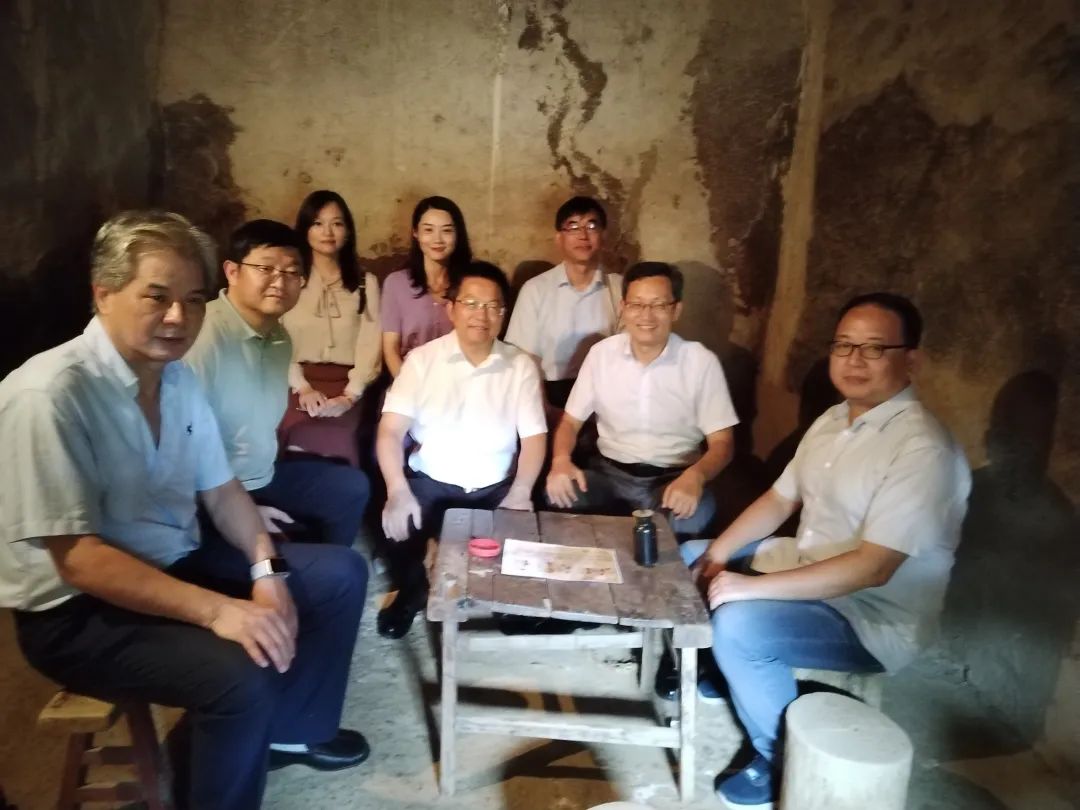
The research was conducted through discussions, field visits, and other methods. The team from Anhui Agricultural University inspected locations such as Xiaogang Panpan Food Co., Ltd., former farmyards, and Fengyang County Agricultural Product E-commerce Incubation Workshop, and gained firsthand insights into the Xiaogang spirit of "reform and innovation, daring to be the first". They collected fresh materials for the compilation of "Fifty Years of Xiaogang Village".
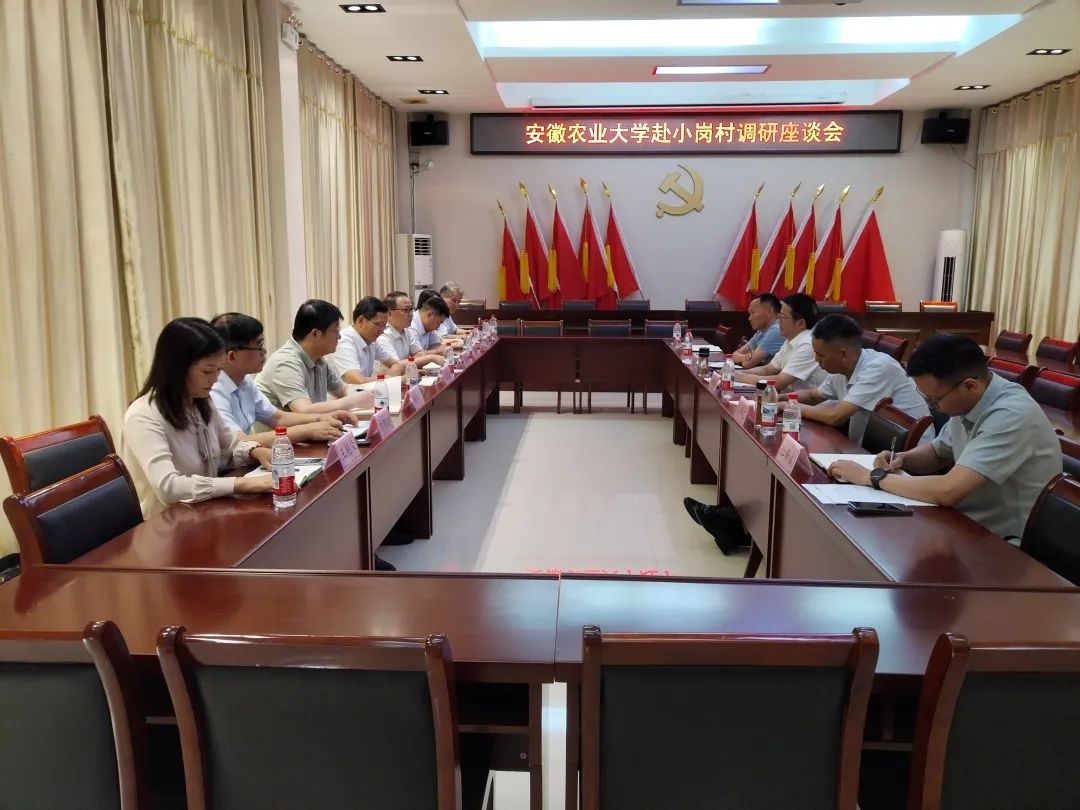
After conducting on-site research, the two sides held a special symposium in the party member activity room of Xiaogang Village, focusing on three major topics: improving the quality of the compilation of "50 Years of Xiaogang Village", summarizing the experience of Xiaogang reform, and deepening cooperation between the school and the local area, to gather consensus and clarify direction.
Zhang Qingliang emphasized that Xiaogang Village is the main birthplace of rural reform in China, and the compilation of "50 Years of Xiaogang Village" is not only a "record of history", but also a strategic task of "inheriting spirit and guiding practice". Anhui Agricultural University will establish a "lean research team" composed of experts in rural revitalization, agricultural economy, and historical research fields, to dig deep into the historical materials of places such as "rural courtyards" in the past, ensuring the restoration of the truth of reform and highlighting the historical thickness; Combining contemporary practices such as Xiaogang Panpan Food and E-commerce Incubation Workshop, extract the "Xiaogang logic" of rural reform, and make historical books have practical guidance significance. Anhui Agricultural University will also take this survey as a starting point to deeply link with Xiaogang Village in talent cultivation, scientific and technological services, and industrial upgrading, building a coordinated development system of talent cultivation, scientific and technological innovation, and achievement transformation, promoting the integration of scientific and technological innovation and industrial innovation, and extending campus local cooperation from historical compilation to the main battlefield of rural revitalization.
Li Jinzhu pointed out that Anhui Agricultural University is a leading agricultural university in the province, with profound accumulation in agricultural theory research and reform experience summary. We hope to leverage the academic advantages of universities to make 'Fifty Years of Xiaogang Village' a model reading material that showcases the achievements of Anhui's rural reform and provides reference for the modernization of agriculture and rural areas nationwide, with the warmth of character stories, the thickness of historical details, and the depth of theoretical refinement. At the same time, the compilation of "Fifty Years of Xiaogang Village" should be turned into a link project between school and land, and through the sharing of historical materials, discussions and exchanges in the process of compiling history, both sides should deepen their understanding of the laws of Xiaogang reform; By using academic research results to support practice, we aim to promote Xiaogang Village to "go more steadily and further" in deepening rural reform and developing characteristic industries, truly realizing the dual empowerment of historical compilation and practice.
This survey has successfully built a new bridge for the collaboration and two-way empowerment between Anhui Agricultural University and Xiaogang Village. In the future, guided by the spirit of reform, both sides will work together in service practice, allowing Xiaogang Village, as the banner of rural reform, to continue to shine brightly in the journey of rural revitalization in the new era. (Li Wenqi)
In order to conscientiously implement the deployment of the "1+5" Agricultural Science and Technology Innovation Alliance by the Provincial Party Committee and Provincial Government, and solidly promote the compilation work of the "14th Five Year Plan" national key publishing plan project "China Rural Reform History Series - Anhui Volume". On the afternoon of August 26th, Zhang Qingliang, Secretary of the Party Committee of Anhui Agricultural University, led a team led by Chen Liqing, member of the Standing Committee of the Party Committee and Vice President of the university; The main leaders and experts of the Organization Department, Party and Government Office, Rural Revitalization College, Social Science Department, School of Economics and Management and other relevant units went to Xiaogang Village, Fengyang County to conduct a special research. Li Jinzhu, member of the Standing Committee of Fengyang County Party Committee, Minister of Propaganda Department, and First Secretary of Xiaogang Village Party Committee, accompanied them throughout the process to explore the source of reform, discuss historical plans, and discuss school local cooperation.
The research was conducted through discussions, field visits, and other methods. The team from Anhui Agricultural University inspected locations such as Xiaogang Panpan Food Co., Ltd., former farmyards, and Fengyang County Agricultural Product E-commerce Incubation Workshop, and gained firsthand insights into the Xiaogang spirit of "reform and innovation, daring to be the first". They collected fresh materials for the compilation of "Fifty Years of Xiaogang Village".
After conducting on-site research, the two sides held a special symposium in the party member activity room of Xiaogang Village, focusing on three major topics: improving the quality of the compilation of "50 Years of Xiaogang Village", summarizing the experience of Xiaogang reform, and deepening cooperation between the school and the local area, to gather consensus and clarify direction.
Zhang Qingliang emphasized that Xiaogang Village is the main birthplace of rural reform in China, and the compilation of "50 Years of Xiaogang Village" is not only a "record of history", but also a strategic task of "inheriting spirit and guiding practice". Anhui Agricultural University will establish a "lean research team" composed of experts in rural revitalization, agricultural economy, and historical research fields, to dig deep into the historical materials of places such as "rural courtyards" in the past, ensuring the restoration of the truth of reform and highlighting the historical thickness; Combining contemporary practices such as Xiaogang Panpan Food and E-commerce Incubation Workshop, extract the "Xiaogang logic" of rural reform, and make historical books have practical guidance significance. Anhui Agricultural University will also take this survey as a starting point to deeply link with Xiaogang Village in talent cultivation, scientific and technological services, and industrial upgrading, building a coordinated development system of talent cultivation, scientific and technological innovation, and achievement transformation, promoting the integration of scientific and technological innovation and industrial innovation, and extending campus local cooperation from historical compilation to the main battlefield of rural revitalization.
Li Jinzhu pointed out that Anhui Agricultural University is a leading agricultural university in the province, with profound accumulation in agricultural theory research and reform experience summary. We hope to leverage the academic advantages of universities to make 'Fifty Years of Xiaogang Village' a model reading material that showcases the achievements of Anhui's rural reform and provides reference for the modernization of agriculture and rural areas nationwide, with the warmth of character stories, the thickness of historical details, and the depth of theoretical refinement. At the same time, the compilation of "Fifty Years of Xiaogang Village" should be turned into a link project between school and land, and through the sharing of historical materials, discussions and exchanges in the process of compiling history, both sides should deepen their understanding of the laws of Xiaogang reform; By using academic research results to support practice, we aim to promote Xiaogang Village to "go more steadily and further" in deepening rural reform and developing characteristic industries, truly realizing the dual empowerment of historical compilation and practice.
This survey has successfully built a new bridge for the collaboration and two-way empowerment between Anhui Agricultural University and Xiaogang Village. In the future, guided by the spirit of reform, both sides will work together in service practice, allowing Xiaogang Village, as the banner of rural reform, to continue to shine brightly in the journey of rural revitalization in the new era. (Li Wenqi)
 Nationally Recognized Civilized Village
 Top Ten Famous Villages in China
 National Ecological Culture Village
 National Key Cultural Relics Protection Units
 National Rural Revitalization Demonstration Village
 National 4A level tourist attraction