


Ming Dynasty Mausoleum Scenic Area
Date:2025-10-17 Views:47
The Ming Emperor's Mausoleum, located 6 kilometers south of Fengyang County, is the tomb of Zhu Yuanzhang's parents. It was first built in the 26th year of the Yuan Dynasty's Zhizheng reign (1366 AD) and rebuilt in the second year of the Hongwu reign (1369 AD). It was recommended to be named Yingling and renamed Huangling, which is equivalent to the Ming Xiaoling Mausoleum in Nanjing and the Ming Thirteen Tombs in Beijing.
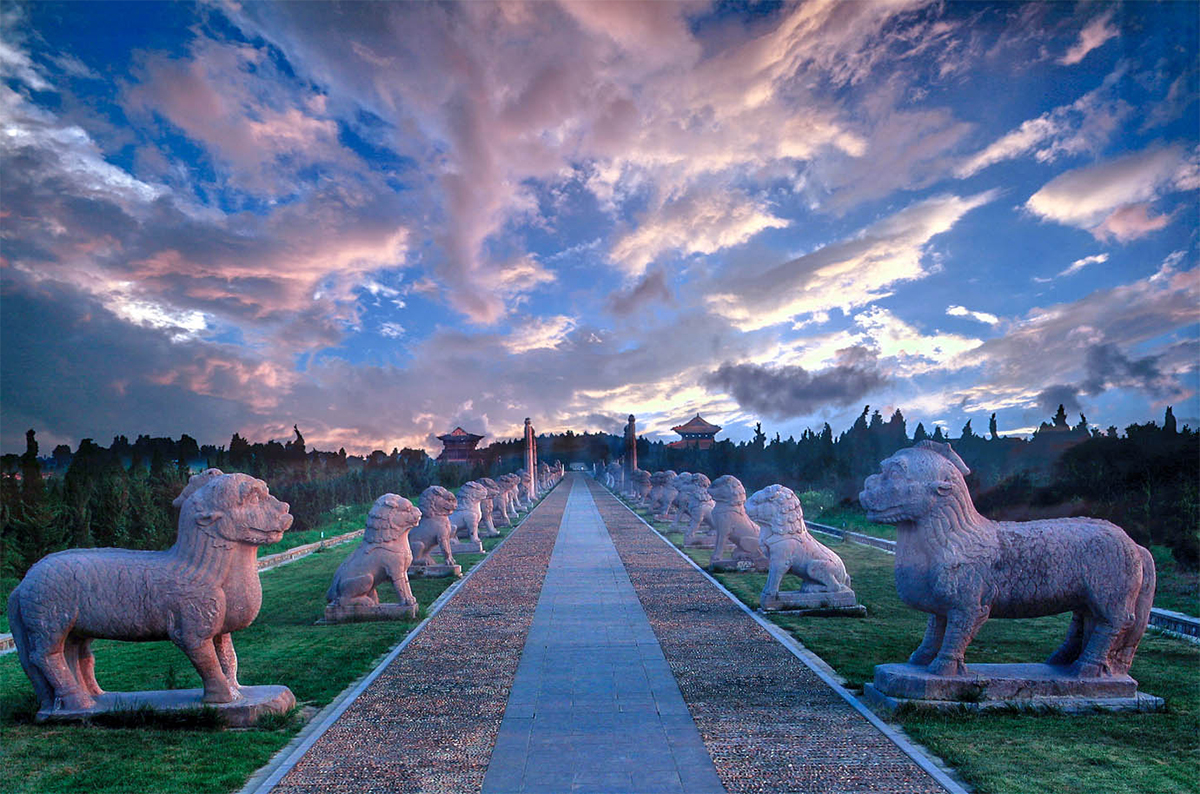
The Imperial Mausoleum originally had three walls: the Imperial City, the Brick City, and the Earth City. The total length of the Shinto is 253 meters, with 32 pairs of stone statues. The carving is exquisite, and the postures are diverse, majestic, and lifelike. The number of stone statues is the highest among all imperial tombs in history. Its artistic style is exquisite and can be regarded as a large-scale stone carving art masterpiece that inherits from the Tang and Song dynasties and inspires the Ming and Qing dynasties.
The Imperial Mausoleum Stele is located on the west side of the southern end of the Shinto Road, with a wordless stele 50 meters east. The Imperial Mausoleum Stele is 6.87 meters high, and the inscription was personally written by Zhu Yuanzhang, describing his own difficult life, military career, and the entire process of seizing the Ming Dynasty, and elucidating the reason for the prosperity of good fortune. The text is easy to understand, the emotions are rich, and it is widely known.
The Ming Dynasty Mausoleum was listed as a national key cultural relic protection unit in 1982.
The Ming Emperor's Mausoleum, located 6 kilometers south of Fengyang County, is the tomb of Zhu Yuanzhang's parents. It was first built in the 26th year of the Yuan Dynasty's Zhizheng reign (1366 AD) and rebuilt in the second year of the Hongwu reign (1369 AD). It was recommended to be named Yingling and renamed Huangling, which is equivalent to the Ming Xiaoling Mausoleum in Nanjing and the Ming Thirteen Tombs in Beijing.
The Imperial Mausoleum originally had three walls: the Imperial City, the Brick City, and the Earth City. The total length of the Shinto is 253 meters, with 32 pairs of stone statues. The carving is exquisite, and the postures are diverse, majestic, and lifelike. The number of stone statues is the highest among all imperial tombs in history. Its artistic style is exquisite and can be regarded as a large-scale stone carving art masterpiece that inherits from the Tang and Song dynasties and inspires the Ming and Qing dynasties.
The Imperial Mausoleum Stele is located on the west side of the southern end of the Shinto Road, with a wordless stele 50 meters east. The Imperial Mausoleum Stele is 6.87 meters high, and the inscription was personally written by Zhu Yuanzhang, describing his own difficult life, military career, and the entire process of seizing the Ming Dynasty, and elucidating the reason for the prosperity of good fortune. The text is easy to understand, the emotions are rich, and it is widely known.
The Ming Dynasty Mausoleum was listed as a national key cultural relic protection unit in 1982.
- Last:None
- Next:Jinggang Campsite
 Nationally Recognized Civilized Village
 Top Ten Famous Villages in China
 National Ecological Culture Village
 National Key Cultural Relics Protection Units
 National Rural Revitalization Demonstration Village
 National 4A level tourist attraction